


Canada’s upward trajectory on the world stage in IFAF men’s and women’s competitions points towards a potential summit that could earn them medals and qualification for LA28 at this summer’s 2026 IFAF World Flag.
The Canadians arrive in Düsseldorf off the back of a successful IFAF Americas 2025 campaign as true contenders for the world title.
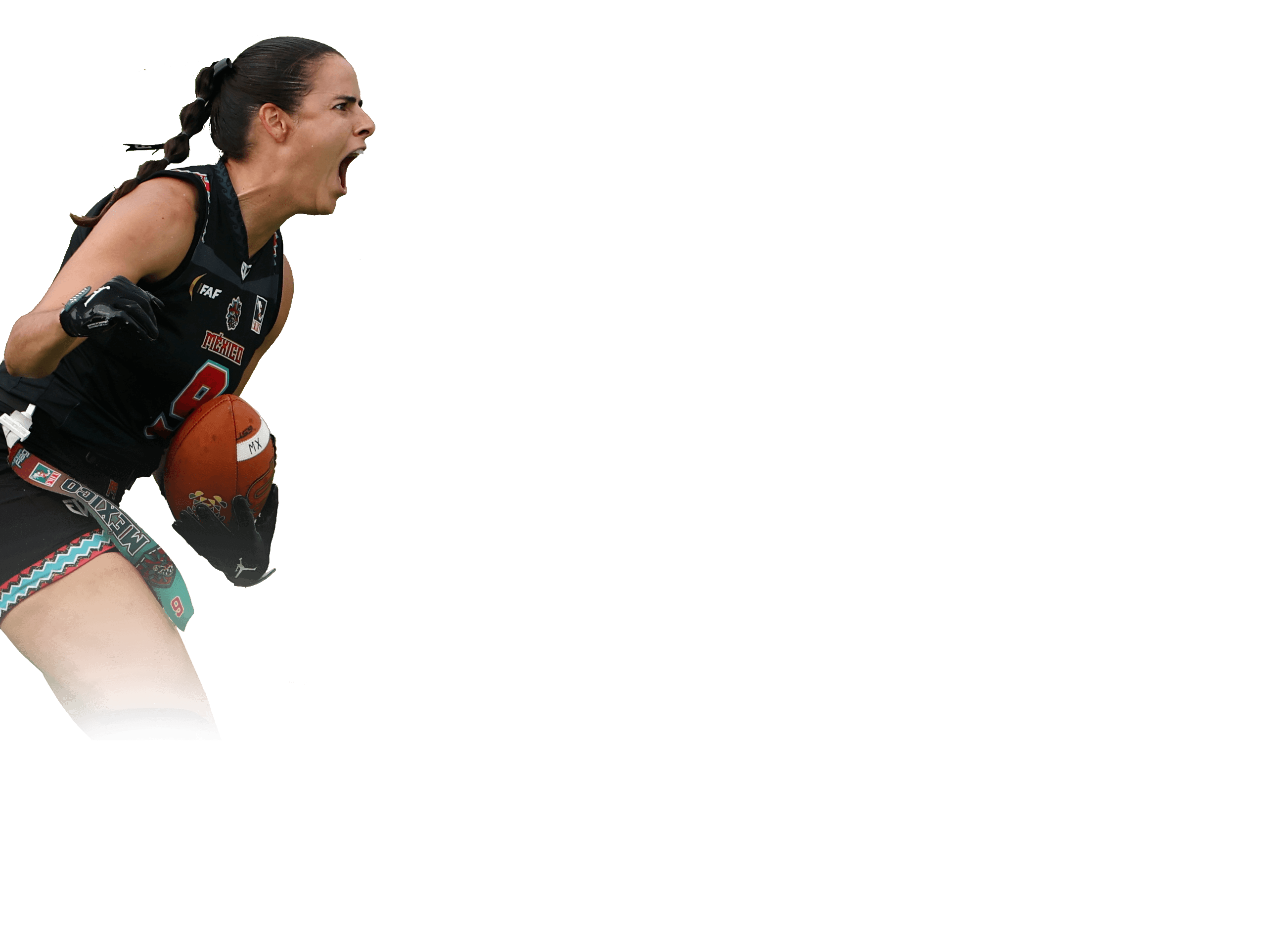
The women will still have bitter memories of a gold medal game that was abandoned in the first half due to inclement weather, resulting by rule in Mexico being crowned continental champions as they were ahead by two scores. That 12-0 lead might well have been halved with Canada yards from the end zone when thunder and lightning intervened. Mexico has become Canada’s nemesis, beating them in the semifinals of The World Games last year and in group play and the knockout stages of the 2024 world championships.
That upward trajectory, having not competed at the 2021 IFAF World Championships due to Covid restrictions, has seen Canada finish third at the 2023 Americas, fifth at the worlds in 2024, third at The World Games and second in the Americas in 2025. The IFAF World Rankings show a climb from ninth (2023) to sixth (2024) to fourth in 2025.
The men claimed bronze at the 2025 Americas with a 32-22 victory over Panama as Michael O’Connor threw for five touchdowns to four different receivers. USA had too much firepower in the group games and Mexico knocked them out in the semifinals. Two years earlier Canada had lost the third-place game to Panama. They finished seventh at the last IFAF world championships and in the IFAF World Rankings have progressed from 13th (2023) to 12th (2024) to 10th in 2025.
In Opposition in Düsseldorf
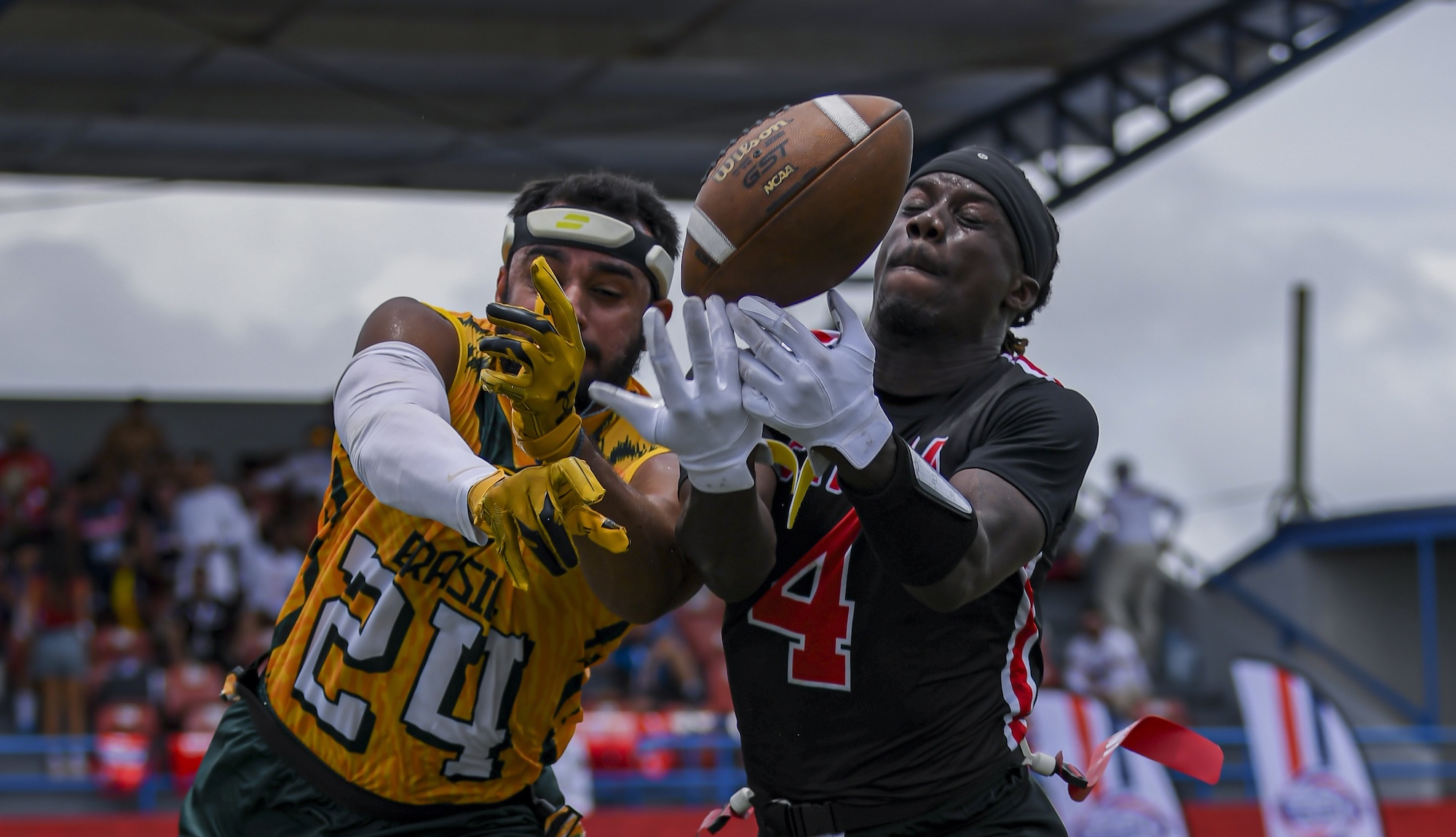
The route to glory will not be an easy one. In group D, Canada’s women face a Japan team that won bronze at the last world championships in a repeat of the quarterfinals of The World Games, which Canada won by five points. Panama presents a familiar foe and fell to Canada in the Americas semifinals last year. Brazil is in opposition for the first time since the 2023 Americas when Canada triumphed 21-0.
The men face three unfamiliar opponents in Group D. Beaten finalists in last year’s IFAF World Championships and 2025 Euro Flag, Austria are in opposition along with Asia champion Japan and winner of the first IFAF Africa Flag tournament Nigeria (32).
Players to Watch
Women: Sarah Parker, quarterback
Men: Michael O’Connor, quarterback
IFAF World Championships Pedigree
Canada’s women won the IFAF world championship on home soil in 2010 with a 31-18 victory over the United States and reclaimed the crown four years later with a 32-21 win over USA in Italy. Silver was won in 2008 and bronze in 2018 making them the third most successful nation on the world stage. In 2024 a fifth-place finish was achieved following a quarterfinals loss to Mexico.
The men won gold as hosts in 2008 with a 12-6 win over Denmark, but the podium has eluded them since with bronze medal game defeats to Italy in 2010 and 2014. Two years ago in Finland, Switzerland eliminated Canada at the quarterfinals stage, and they took seventh place overall.
The Coaches
At prior IFAF world championships Canada was represented by the club teams that won the men’s and women’s national championships but now select a squad as part of a true national team program. Paul LaPolice leads the men while Rachel Lessard takes charge of the women.
LaPolice has served as a head coach in the Canadian Football League, most notably leading the Winnipeg Blue Bombers to one of the most significant turnarounds in league history and a Grey Cup appearance, earning a nomination for CFL Coach of the Year. As an offensive coordinator, he directed record setting offences and contributed to a Grey Cup championship.
A member of Canada’s world championship team in 2010, Lessard has earned multiple national and international medals in both coaching and playing roles and was Canada’s defensive coordinator at the 2023 IFAF Americas. She Universite de Montréal to their 2nd Canadian Collegiate Flag Football Championship national title.
In Preparation
Through funding from the Canadian Olympic Committee, Canada took 18 men, 24 women, and five coaches on each side of the ball to train at the Chula Vista Elite Athletic Training Center in California this month.
“We have a lot of expectation for this camp,” said coach Lessard. “We are testing defense; we are testing new plays. I also expect the team culture to be solid. Our DNA has shown to be a winning DNA, so we want to know our youngsters are complying with team culture that we have.
“Our country is so big, so having this chance is phenomenal. It’s a game changer for us. In this weather with a group of 24, it’s priceless.”
The women’s team held scrimmages, while the men played a team from California and Canada is now poised to undertake a series of ID camps to explore talent across the nation in British Columbia, Manitoba, Saskatchewan, Alberta and New Brunswick.
Photo: Ernesto Campuzano