


The IFAF Women in the American Football Community came together for the first time last week with an online panel and networking session that highlighted the journeys and barriers faced by prominent women in the sport.
The well-attended webinar was open to the 400+ women from more than 40 countries who applied to participate in the IFAF Women’s Leadership Programme. With only 16 spots available on the course, the Community was established with the aim of supporting the wider base of women who are driving American football into a new era.
The group discussion was hosted by IFAF President Pierre Trochet, who yesterday spoke at the IWG Global Summit in Birmingham, UK, about the initiative and the wider package of measures put in place by IFAF to increase gender equity in the sport’s governance – a priority of the IFAF Board.
Trochet introduced the new Community members to three inspiring women who have risen to the top of the sport.
The panel featured Jacquelyn Dahl, CEO of 1UP Sports Marketing; Afia Law, International Flag Football Development Manager for the National Football League; and Hafsa Kamara, an Olympic athlete and head of the Sierra Leone Authority of American Football. Each described their path in the sports industry, shared challenges they faced in progressing their respective careers, provided advice and guidance, and answered questions.
“I had to chase and scrape and find somebody to get advice from, beg for mentorship, for other women leaders, so this is a milestone for me to be a part of,” said Dahl. “I feel very proud and confident of the community that we’ve built; women in leadership positions, female athletes, former athletes coming together to help each other and lift each other up.”
A college tennis athlete, Dahl described her humble beginnings from slinging t-shirts into the stands at minor league baseball games as an intern to representing athletes away from the field of play, working with household names such as Partick Mahomes and Alex Morgan. Her agency signed United States star Ashlea Klam when Dahl was seeking to represent a person she described as the Mahomes of flag football.
“I would like to see more female agents because there are so many underrepresented female athletes beyond the major names,” she replied when asked what opportunities might be open to women in her field by a member of the group. “There are flag football players who deserve representation and the women within the flag football community are well placed to take on that role.”
Law discovered American football at university in her native England and began playing tackle football, eventually representing Great Britain at the IFAF Women’s World Championships. Without a clear pathway available into the sports business, she volunteered to work at flag football grassroots events at the NFL London Games. Her persistence led to a temporary position with the NFL that grew into her current role.
“To me it’s about just volunteering and putting yourself out there, but finding the thing that you really, really love, and doing that,” said Law. “I think the energy you put towards that, and the passion that comes through, it naturally builds something, and it creates something. Now I can help to build those opportunities for the next generation, and particularly for women and girls.
“There’s so many amazing women that I’ve met in this sport around the world that aren’t even working in the sport yet. They are coaching, they’re trainers at their team, or they’re doing something in their local communities, but have the ability to be doing so much more, and to be doing something on a higher level. Sometimes it’s hard to see that route of how to get there, and how to have a career in the sport, but I think the talent we have is there, and so I just hope that in the next five years, ten years, that we see more of these women coming through.”
Hafsa Kamara represented Sierra Leone at the 2016 Olympic Games, worked in social media marketing and became a personal trainer, then she combined sports and marketing, working with Nike while still training and competing. Most recently, she has established the Sierra Leone Authority of American Football, which has been granted IFAF allied membership.
“Competing at Rio 2016, I really felt like I had my country on my back, I had my community on my back, I had my family name on the back, and I went into that first round with the notion that I was going reach the ultimate success,” she recalled.
“I remember going to my phone and seeing videos of people in Sierra Leone and women in the marketplace, yelling and chanting my name. It wasn’t until years later that I realized, how much of an inspiration that moment was for people. And then it became an inspiration even for me in not wanting that moment just for myself. I wanted to make sure other girls, other women, had an opportunity for their names to be cheered in the streets of Sierra Leone.”
Kamara worked established Africa Rise, a sports ecosystem platform tailored towards telling the stories of sports on the continent. They highlight the community opportunities there, while also, building a database for those who have creative ideas in sports for Africa and those who are willing to invest. She explained to the group that having the confidence to begin a passion project is an essential element of success.
“When you’re intentional about something, when you’re passionate about something, you have the potential to do this,” she said. “Do not be discouraged by whether there’s the doubts others have, because a lot of times, that’s just fear of their own that they’re projecting. Flag in itself is an opportunity to build the confidence for young girls to act and understand that you do not need permission to lead, you do not need permission to dream, you just need to make sure that you put yourself in the right place at the right time, with the right people, doing the right things.”
Law added: “Sometimes it’s about designing something uniquely to women or girls in that community or in that space that they’re in to make it relevant for them.
“Are barriers there that we need to think about that they can’t access the sport? Is it because they don’t have childcare? Is there something there that needs to be considered? What can you can do to break them down?”
Having given food for thought to the women who expressed an interest in the IFAF Women’s Leadership Programme, IFAF will continue to engage with this enthusiastic and determined community to accelerate increased representation of women in the governance of American Football.
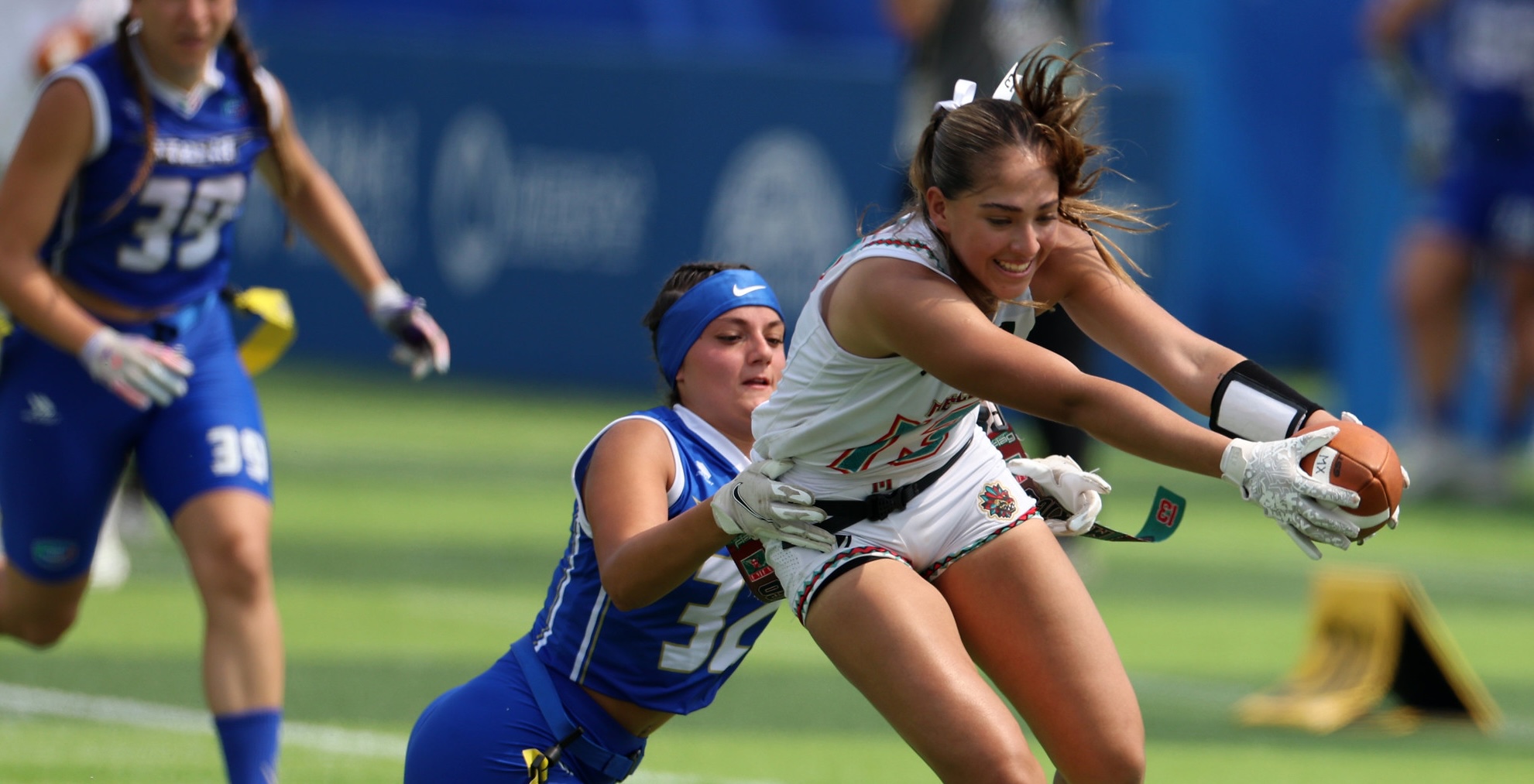
Photo: Xinhua/Chen Bin