


The Gridiron Gems Initiative run by Browns Nigeria introduced flag football to girls at a Lagos correctional centre, teaching teamwork, discipline, and leadership skills.
More than 200 girls participated, sewing their own jerseys and developing a sense of ownership and confidence that transferred beyond the game.
Gridiron Gems is using flag football as a tool for rehabilitation, education and reintegration into society, empowering girls at Correctional Facilities. They are breaking barriers, one touchdown at a time.
Some stories begin long before the whistle blows or a crowd gathers. They take shape quietly, in spaces far removed from stadium lights, where opportunity is scarce, and hope must be nurtured with intention. At the Special Correctional Centre for Girls in Idi-Araba, Lagos, the Gridiron Gems Initiative found a profound expression of its purpose. This outreach was never just about introducing a sport; it was hinged on the idea that every girl, regardless of circumstance, deserves access to learn about teamwork, imbibe discipline in a way that is not already restrictive, and experience boundless joy.
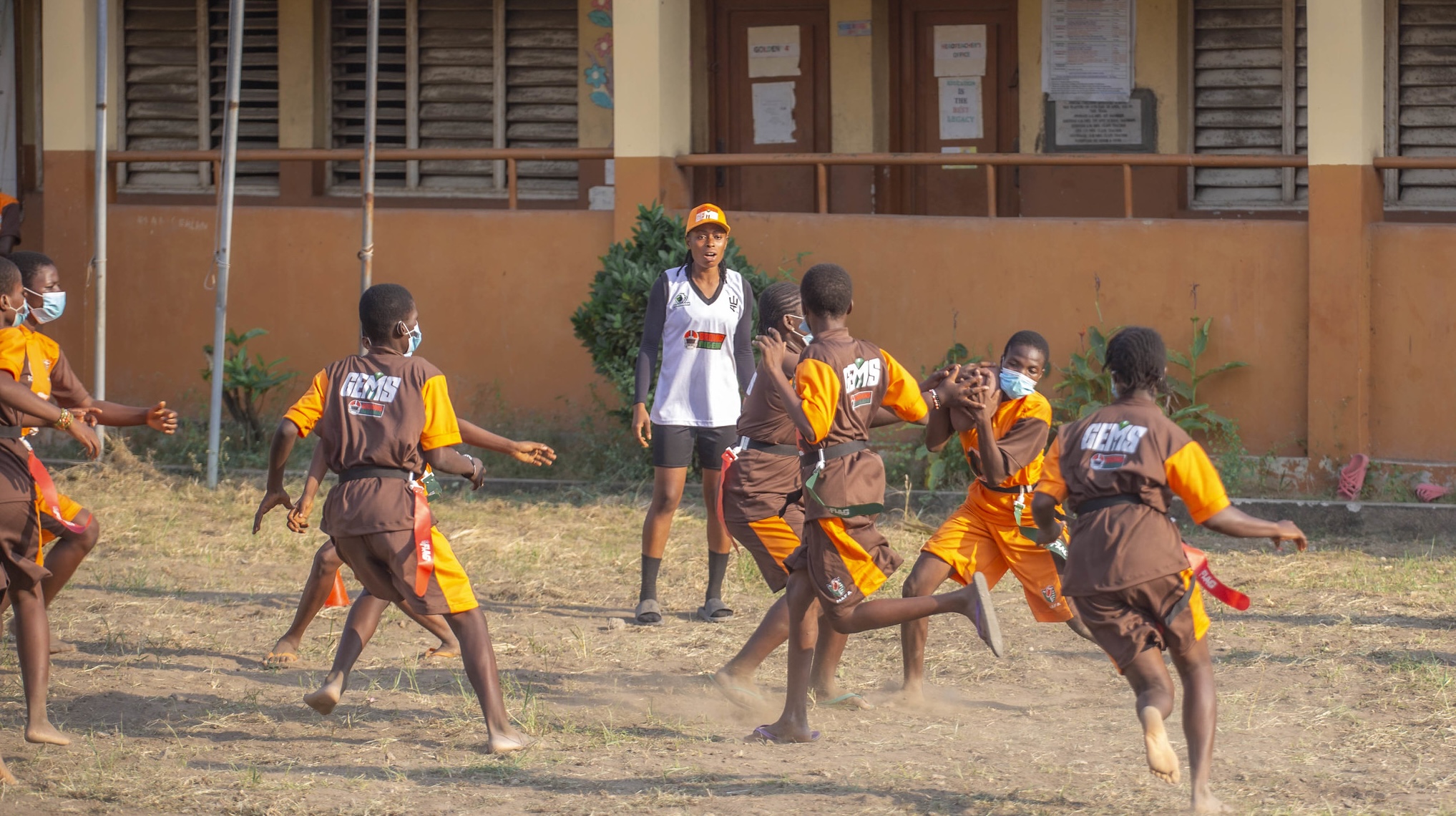
Flag football was the first and only sport to be introduced to the center. For many of the girls, it marked their first experience with an organised team sport. Over three months, bi-weekly training sessions were delivered by volunteer coaches from the members of Nigeria’s National Women’s Flag Football Team, and enthusiasts from the flag football Community in Lagos, Nigeria. Training focused on the fundamentals of learning positions and throwing, catching, route running, and flag pulling, while also reinforcing communication, cooperation, and discipline.
The girls engaged with the programme with notable energy. Skills improved steadily, movements became more assured, and interactions evolved from hesitation to shared understanding of positions and play calls. Over time, the game created a common language, one that fostered connection, structure, and a sense of belonging within the centre.
In a deliberate departure from conventional outreach models, the program integrated vocational skills already being taught at the centre. Instead of receiving ready-made jerseys, the girls sewed their own. More than eighty jerseys were produced in total, each one a symbol of ownership, patience, and pride. This process transformed anticipation into participation. When the girls eventually took the field wearing jerseys they had created themselves, the message was clear: this was theirs.
On activation day, the program unfolded in layers. An indoor fundamentals session introduced the rules and values of flag football. This was followed by team formation, namely team Zircon, Ruby, Topaz, and Emerald, and hours of guided drills and scrimmages.
What stood out was not just skill acquisition, but leadership. Girls encouraged one another, corrected mistakes, and stepped into captaincy roles organically. For many, it was the first time they were seen and trusted as leaders.
Perhaps the most powerful outcome of this outreach was what happened after the activation. Volunteers from the Nigeria national women’s team who won the IFAF Africa Flag championships in 2025, returned bi-weekly for four months, sustaining training and mentorship. Over time, more than 200 girls passed through the program as new participants entered the system, and others were reintegrated into society.
Flag football is now included in the Centre’s weekly activities, making it the first sport ever institutionalised within the facility. Four footballs and a three full set of three flags were donated to ensure continuity beyond the initial engagement