



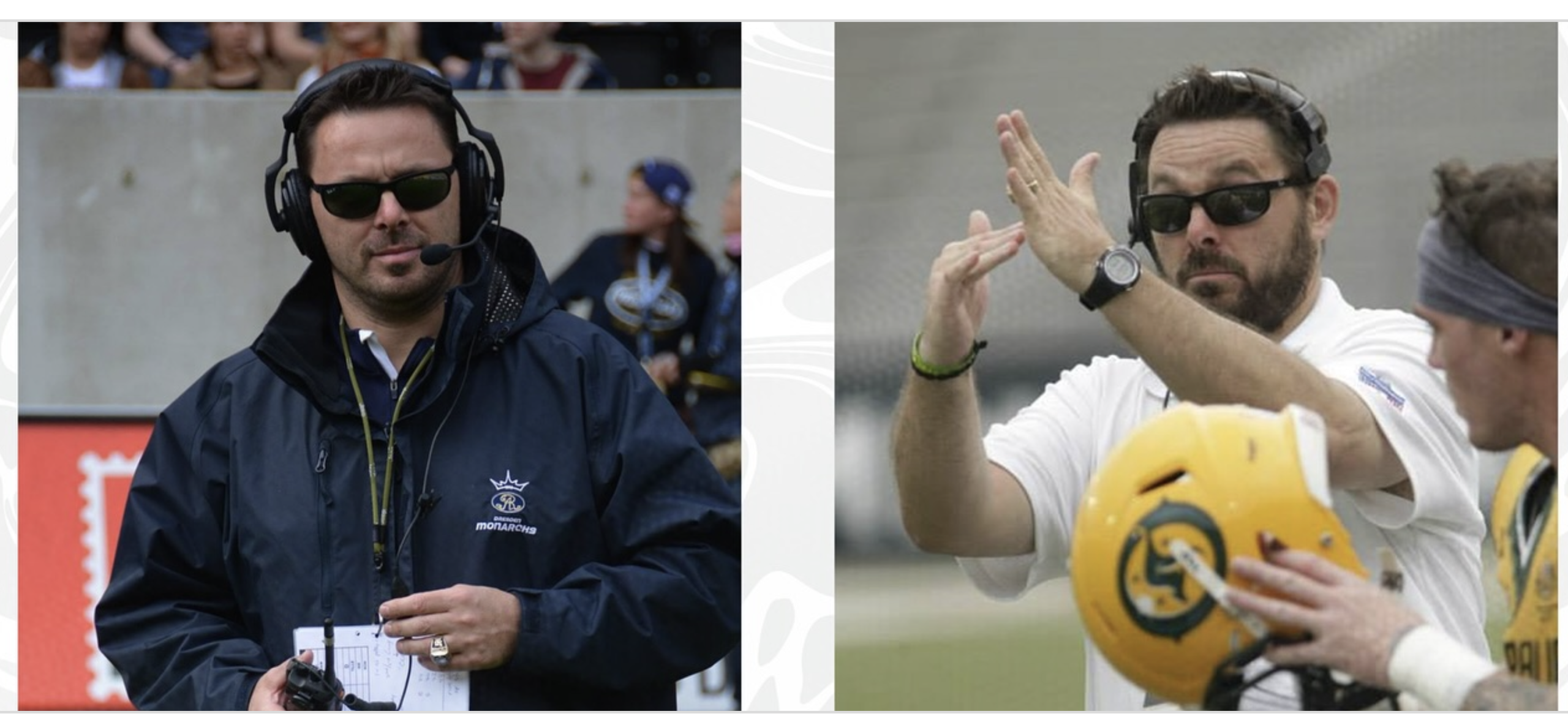
John Leijten is back on familiar ground with the Australian Outback national team. The preparation timeframe is short, the distance to travel to compete is considerable and the opponent lying in wait presents a significant obstacle.
But the head coach of his nation’s U20s heading to Canada in June for the IFAF U20 World Junior Championships is excited by the challenge that lies ahead. He’s been here before, leading the Australian men’s national team in Austria in 2011 and the United States in 2015. John has also gone up against some upcoming opponents and coaches as a member of the Team Europe staff at the NFL Global Junior Championships, notably Canada and Australia’s opening opponent Japan.
“We want to be unpredictable,” John explained as he pondered the clash against Japan on August 22 at Clarke Stadium in Edmonton. The winners will face either USA or Panama in the semifinals. “Sure, like all football coaches, we want to be balanced, fifty-fifty and all that kind of stuff, but my thing is always being unpredictable and trying to control as much as we possibly can.
“Maybe that’s manipulating a defense with a snap count formation, motions, and that kind of stuff. We have to be smart as a smaller nation with an underdog mentality. Also, if an opponent is schematically or physically better than us - and a lot of teams are in this situation - then we need to do everything we can to make it harder for an offense to see what’s going on with our defense.”
Taking a step into the unknown can also have its advantages. Most of the eight teams competing in Edmonton have been inactive on the international stage since 2018, so studying game film to gain an edge is not widely available as a traditional resource. Back in 2011, the unknown and unseen Aussies claimed a small victory on a game’s opening possession by forcing a nervy Team USA to punt but were ultimately unable to avoid defeat.
Some 13 years later, the Australian gridiron landscape has developed the likes of defensive lineman Adam Gotsis, who impressed on that 2011 team as an 18-year-old and is currently playing in the NFL with the Jacksonville Jaguars. The level of the domestic game has improved and naturally the talent level on the national team has elevated.
“The senior players might have played a little longer and physically are more evolved than the than the younger players, but nowadays there’s a bunch of junior players here in our country who start think about what they have to do to get into high school and then college in America,” John says. “So now they start physical preparation a little bit earlier and as a result we already have some physical talent with maybe more experience that translates into a little bit more confidence on the field. The younger players right now, they have less hours of football, but they are probably in better shape to play football than the older ones were in the beginning.
“This is not the first under 20 team we’ve ever had but this will be the first team that I’ve coached and the standard and the expectations are different. Just being good enough is no longer good enough if that makes sense.”
The only member of his family born in Australia; John was raised in the Netherlands when his Dutch parents chose to return to Europe after a brief time spent down under. He served as a national coach in NFL Europe and later with the likes of the Dusseldorf Panther and Dresden Monarchs in the German Football League. Stints in Australia with the Concord Rangers and Western Crusaders followed his time with the men’s national team. It was those positive experiences leading the Outback squads that caused John to return to the national team stage.
“It all happened really quickly,” he explains. “The previous head coach John Roe stepped down for family reasons and so the position came available. I think the appeal is that it’s the flagship of your country and having the best players come together to compete. That’s very different from club football here.
“I want to provide somewhat of an example of how football should work in a camp environment and how players need to prepare physically and mentally and for the players to experience football on the higher level. It’s played with a different intensity and meaning.
“With the seniors we would bring in all these players who would then go back to their clubs and become multipliers in terms of how football can be played and experienced, so we want to do the same thing with the junior program and continue that development. We want to create an environment where they can get really excited about the game.”
The Outback coaching staff is currently conducting tryouts in five locations spread out across the vast Australian landscape then will gather virtually to prepare the final game plan for the World Championships. The squad will practice for the first time as a collective unit at a pre-tournament camp once in Alberta.
“We need to get our base stuff ready so we can teach through weekly Zoom calls with coaches and players,” John explains. “It will be a very intense process until June. There’s a responsibility for the players to be preparing themselves too. Sometimes I’ll post a hashtag of the first letters of ‘every day is a good day to get better’ and that is the mindset our team needs to have. There are no guarantees, but you have to put in that effort.”
The fruits of all that preparation and the tactic of unpredictability will come to a head against Japan on Saturday, August 22, kickoff 4pm.
Photos: Gridiron Australia