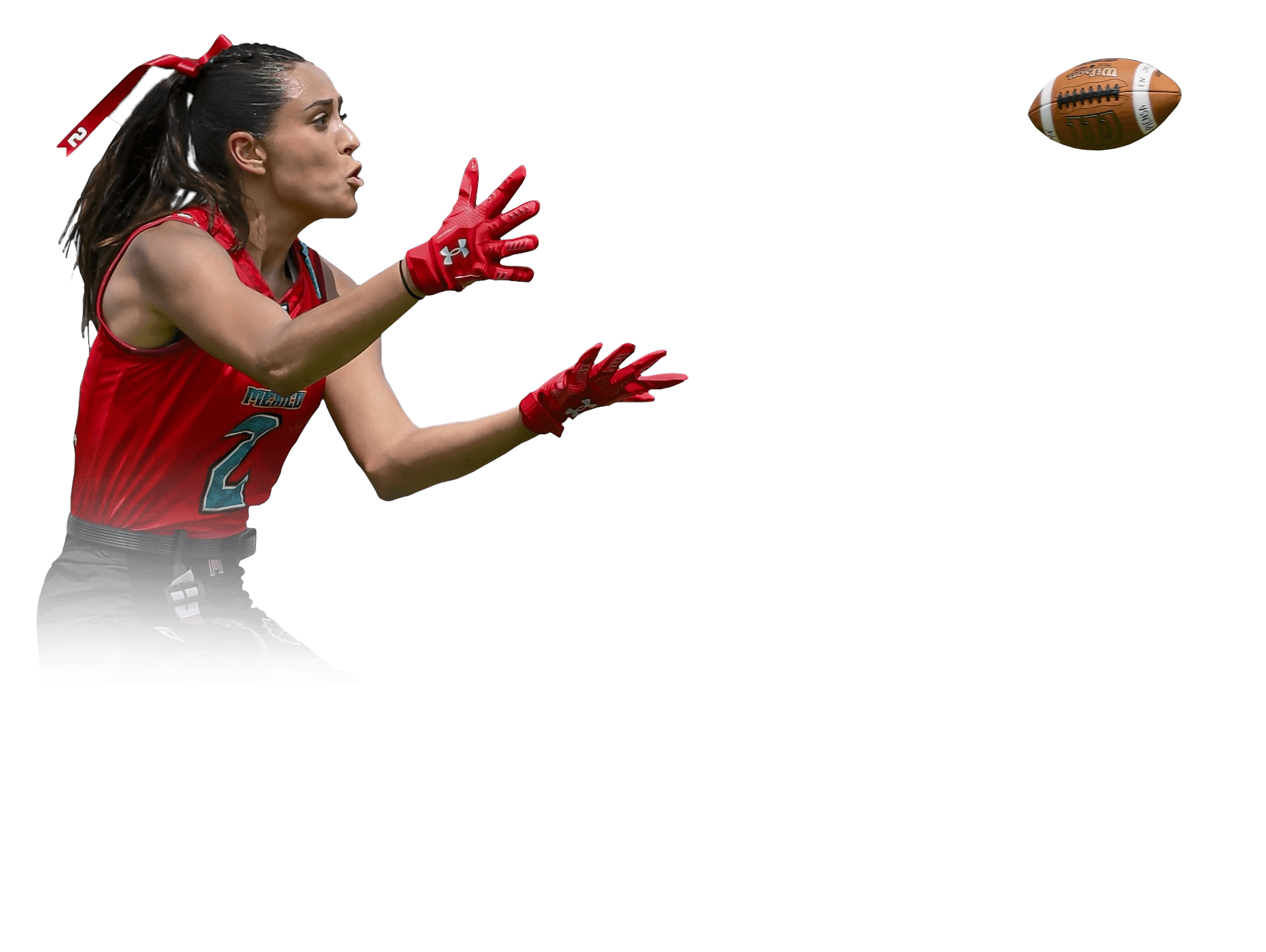



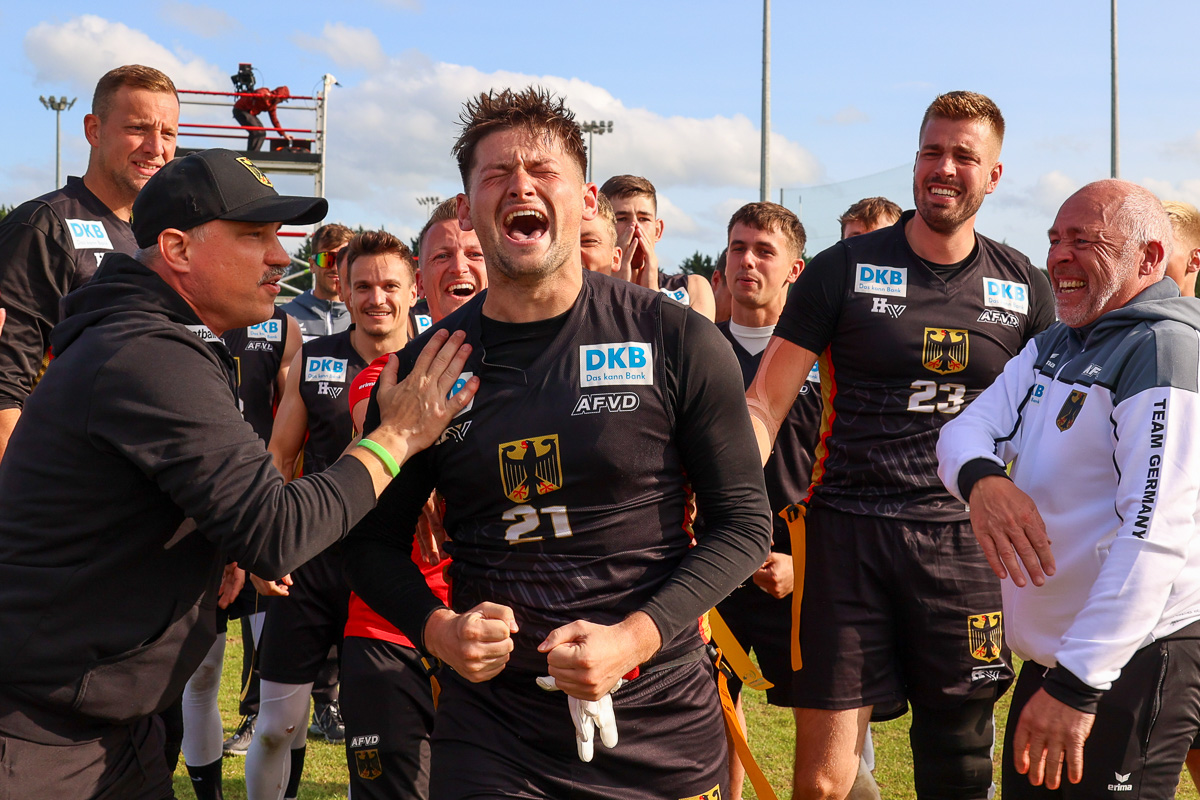
Having finished in 12th place at the 2024 IFAF Flag Football World Championships a year after they claimed the European Championships gold medal, Germany has appointed Said Salazar Déciga as the new head coach of its men’s national team.
Said has been deeply rooted in the world of flag football since his childhood in his native Mexico. Sport has accompanied him since the age of six and he developed into an outstanding player and coach. He played for prestigious teams such as Aguilas Blancas and Tec de Monterrey in Mexico, where he was twice named Offensive Player of the Year and set numerous records for yards caught and points scored.
His international playing career reached its peak when he represented Mexico at several major tournaments, including the bronze medal at the 2016 IFAF World Championships in Miami, the silver medal at the 2021 IFAF World Championships in Jerusalem and the bronze medal at the 2022 World Games.
Deciga has also achieved significant success as a coach. Since December 2022, he has led the Moloss de Asnières team in France, leading them to an impressive 137 wins with only 25 defeats and 3 draws. As the defensive coordinator of the French national flag football team, the team sensationally finished 5th at the 2024 World Cup in Finland, after only finishing 11th at the European Championship the year before.
IFAF asked Said to outline his role as Germany looks to defend its European title this summer and qualify for the 2026 World Championships.
What do you see as your main challenges taking over a team that is the European champion but did not meet many people’s expectations in Finland at the World Championships?
“Taking over a team with a winning background is always both an opportunity and a challenge. The biggest challenge is maintaining the hunger for success while continuing to evolve. Germany has already proven that it can dominate in Europe, but the global stage presents a different challenge. My focus will be on building a structure that ensures consistency at the highest level, detaching from scoreboard-driven results because I firmly believe that by setting high standards, success will follow naturally, not just in Europe, but in the pursuit of a world championships medal.
“At the same time, I recognize that Germany already has all the elements needed to succeed. That means my role is not about reinventing the team, but about refining key areas: preparation, competition within the roster, and ensuring we are physically, mentally, and strategically ready for every challenge. It’s about finding the right balance between respecting what has made this team great and making the necessary adjustments to raise our level.
“Every team in the world is in a race to improve, and I want our players to embrace that challenge with excitement and determination. We’re not just looking at short-term success; we’re focused on long-term dominance at the international level.”
Does your style of coaching work well with the current style of the German team, or can we expect to see something different from the team?
“My coaching philosophy is built on three core values: accountability, unity, and belief. These values are the foundation of the environment I want to create, where players push each other to be better every single day, and where there’s always a drive to grow as a team.
“I truly believe that a coach’s love for the sport is contagious, and I want that enthusiasm to spread throughout the team. For me, it’s not just about winning or the tactical side; it’s about enjoying the process and making sure we’re having fun while working hard.
“Germany has a unique identity - strong, disciplined, and highly competitive. My goal is not to change that, but to unlock the full potential of each athlete. The mix of cultures, Germany’s perfectionist and disciplined approach combined with my passion for the sport, will be an interesting challenge. It’s about finding a balance where we honor the German work ethic while injecting the excitement and love for the game that drives me.
“It’s going to be a journey, but one that I believe will make us a stronger, more dynamic team. I do expect some tactical adjustments, especially in how we approach specific in-game situations, but the biggest shift will be in mindset: a relentless belief that we can compete with and beat anyone in the world.”
There are other national teams with Mexican coaches, such as Panama, Chile, and Switzerland. Is there something in particular that Mexican coaches bring to flag football?
“Absolutely. Mexican coaches bring passion, creativity, and a deep understanding of the game. Flag football has been a part of Mexican sports culture for decades, and we’ve developed a unique style that blends tactical intelligence with raw emotion and flair.
“Additionally, we understand what it means to build something from the ground up. In Mexico, flag football has grown through community efforts and a love for the sport. Many of us have played, coached, and developed players from the grassroots level to the highest international stage. That gives us a unique perspective on how to create programs with limited resources.”
Will you reach out to athletes in other sports when you look for talented players for the years ahead?
“Yes, I’m 100% convinced that the future of flag football lies in recruiting athletes from diverse backgrounds. Speed, agility, hand-eye coordination, and decision-making under pressure are essential for flag football, and we can find these qualities in athletes from sports like basketball, handball, and even track and field.
“My goal is to create a culture of open doors, where talented athletes, whether they’ve played flag football before or not, know they have the opportunity to compete. I’ve already started this approach since my first camp. The sport is evolving rapidly, and to stay ahead, we need to think beyond traditional talent development pathways.
“Additionally, bringing athletes from other sports will help us put our current flag football players' development into perspective, especially in terms of athletic development. This is a significant shift, and every week counts. The big question is how the players will adapt to this new approach, and in this regard, all countries are exploring and discovering together how to navigate this new era of the sport.”
Why did flag football appeal to you at a young age?
“I believe nothing compares to the rush of making a big play: a touchdown, an interception, or even a simple flag pull. That feeling, combined with the sense of belonging to a team and striving for victory together, is what truly drew me to the sport. My most vivid memories are of those game-winning plays in the final seconds or things that left me feeling defeated on the field.
“Moreover, unlike many other sports, flag football requires the perfect blend of speed, agility, intelligence, and teamwork. It’s not enough to be the fastest or the strongest. You need to think, react, and trust your teammates.
“Beyond that, flag football has opened up opportunities I never imagined. It gave me the chance to compete internationally, meet incredible people, and now, to coach at the highest level. After working in the industry and completing my professional degree (which was funded by a university scholarship for playing football), I decided to leave the "traditional" path behind and fully dedicate myself to this sport. It’s been a challenge, but I would do it all over again in a heartbeat, especially now that Germany has given me the chance to turn my passion into my daily work.
“That’s why I’m passionate about growing this sport and ensuring that future generations have the same opportunities I had. That impact is what gets me up every day.”