



For teams entering IFAF international competitions, there is one unavoidable logistical and financial challenge to address when preparing to line up on the gridiron.
Traveling away from home inevitably falls on the shoulders of one team and the commitment of male and female athletes - particularly in the tackle game – is underlined by their willingness to cross borders and even continents for the honor of representing their nation.
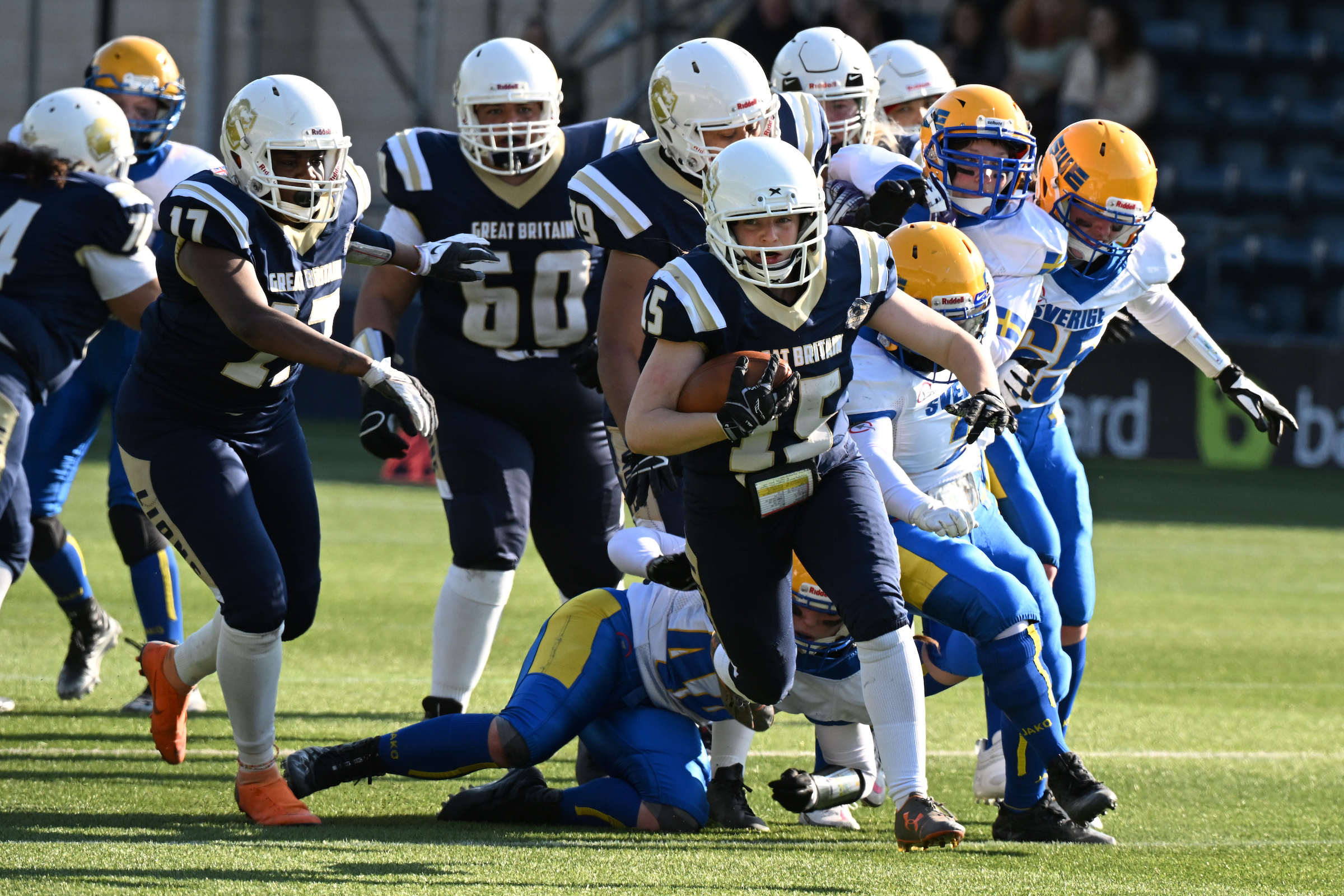
Next weekend, Great Britain travels to Calatayud, Zaragoza, to take on Spain in both teams’ third game of the 2023/24 IFAF Women’s European Championships (kickoff 6pm CET, Saturday, April 13). Spain currently tops the five-team tournament standings at 2-0, with Great Britain (1-1) aiming to take over the top spot. Great Britain has already hosted Sweden in April and having won that clash 40-0, lost by a single point away to Germany a month later. This is their last road trip before welcoming Finland in August.
“The challenge that you have with any international fixture is that you don’t know where your players are going to be drawn from, so when booking flights, you have to just make the assumption that you’re all going from one place, such as Heathrow, and travel from there,” says Great Britain team manager Becky Williams. “You also have to make late bookings, once the squad is picked and that is generally really expensive. This isn’t like the NFL, or the England football team. We don’t have the ability to alter flights if we get a late injury.”
Spain head coach Manuel Ibáñez Rodríguez has taken his team to Finland, where they upset the reigning European champions 12-0 in April before beating Germany narrowly at home. His team will travel to Sweden in May.
“The distance we had to travel to Finland adds to the complexity of our logistics,” explains Manuel. “Long-haul travel can be physically demanding for the players, potentially impact their performance and recovery. Additionally, coordinating travel arrangements, such as flights, accommodations, and transportation requires meticulous planning to ensure a smooth and efficient journey for the team.”
Becky Williams knows those challenges only too well. There can be restrictions on airlines depending on the destination, and while smaller airports might present a more affordable option, that comes with the added cost of then bussing the squad to their final destination. Teams generally arrive one day, play the next and then travel home after a second night’s stay. Meals have to be booked in advance and for the right time of day depending on kickoff times.
And then there’s the challenge of hauling a roster’s worth of equipment overseas.
“We try to mitigate risk, distribute equipment, and have a plan for everything,” adds Becky. “The women’s team have never had a problem. We’re well-drilled in these things. It’s too expensive to send a van with equipment, though that would be ideal.”
Great Britain place trackers in equipment bags having seen one team lose some of their essentials when traveling to the last IFAF World Championships. Players carry their kit, and game footballs are split among the coaches, rather than risk losing every ball en route.
Yet still they travel to compete, with players covering the majority of their own costs. The British American Football Association allocates some funds to help the team that won silver at the worlds in Finland in 2022, losing to the United States in the championship game.
“For us it’s about growth, it’s about being better tomorrow than we were yesterday,” adds Becky, who has been part of the GB women’s set up since day one, originally as a player in 2013. “It’s about having more players to choose from and those rookies being the stars of the show because that’s how we grow.
“If we look at who we had playing against USA in the final, we probably have maybe 25 or 30 of those players still with but we’ll have the next generation in and from my perspective I want a younger squad. We started off being a retirement home for rugby players! Now we have the building blocks for the future.”
The preferred IFAF format across Europe for the women’s, men’s and U19s tackle tournaments is now for games to be played across a two-year span with an equal number of home and away games, rather than a potentially two-week tournament in a single venue. The required rest period between games in the tournament format increases its duration and can present a challenge in terms of player availability and accommodation expenses. Some team managers and coaches like the current system, while others do not.
“I don’t think there’s any home advantage for a nation hosting a single game as you have with a tournament because it’s equal for all with these games,” adds Becky. “I don’t necessarily like the format that the competition has now. Before, I needed one return flight versus two. We can make money from a home game, by selling tickets, but you’re still looking at a lot of money to travel and host games over two years. I think the argument for this new format was considered the best at the time and we’ll see how it plays out.”
Regardless, Great Britain’s players, who hail from Scotland in the north to the coast of England in the south, will make the sacrifices necessary to compete for pole position in the standings in Spain. They’ll travel by planes, trains and automobiles to play the sport they love at the highest level.
Photo: Geoff White